The Explorer’s Journal | by Julian Vance | Oct 14th, Kathmandu.
Note: The smell of juniper incense always lingers longer in the high altitude than you’d expect.
Most people come to the Himalayas looking for “miracles.” They want a stone that shields them from the world’s chaos as if it were a physical wall. But after eighteen years of tracing the mineral veins of Mount Everest and sitting with the last of the master artisans, I’ve realized that we’ve been looking at “Protection” from the wrong angle.
Ancient artifacts—what we now call Talismans—were never meant to be supernatural bodyguards. They are, in fact, the most sophisticated cognitive anchors ever engineered by the human mind.
I remember a specific afternoon in a small workshop near the Rongbuk Monastery. The air was thin enough to make your head spin, and I watched an old artisan polish a piece of Dzi. He wasn’t praying for magic; he was embedding an intention. He told me that the stone doesn’t change the mountain’s weather—it changes the climber’s relationship with the wind.
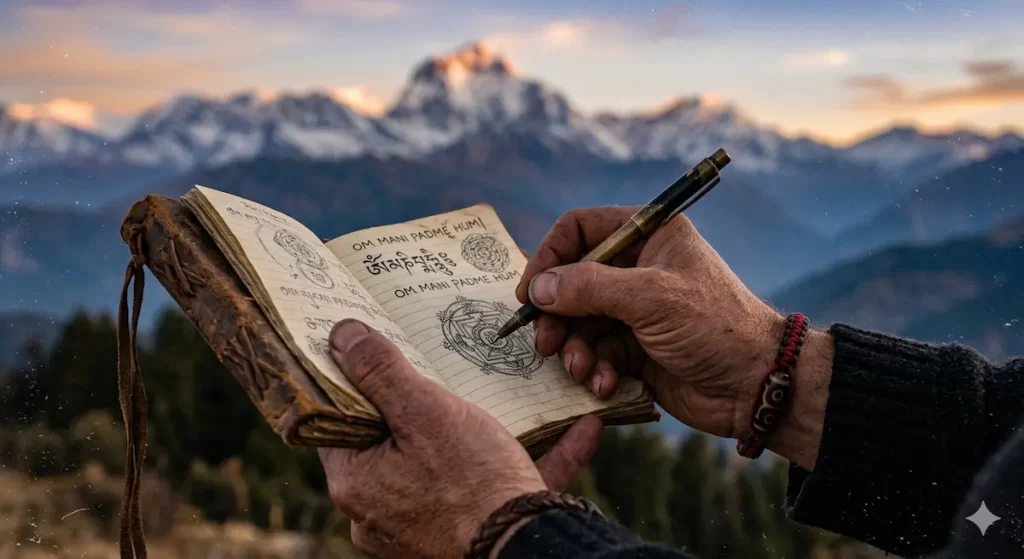
This is the foundation of the Everest Talisman philosophy. We aren’t selling folklore. We are reconstructing a 1,300-year-old psychological architecture. When you hold a piece of the peak, you aren’t just wearing jewelry; you are engaging a mnemonic device designed to snap your attention back to your own center of gravity, no matter how loud the modern world gets.
*The views expressed in this journal are based on Julian Vance’s independent research and historical interpretations.
Frequently Asked Questions
Protection, in our context, is an internal state. These artifacts function as cognitive anchors. By wearing a piece rooted in 1,300 years of heritage, you create a tactile reminder for your brain to remain centered. It’s not about changing the external world; it’s about reinforcing your mental resilience against modern distractions.
Folklore is a story we tell; architecture is something we build. We believe ancient motifs were designed with intent—to structure the human mind's focus. Julian’s research focuses on how these specific patterns and minerals interact with human perception to act as mnemonic devices for clarity and fortitude.
Absolutely. Each mineral is part of a small-scale, heritage-focused recovery process. We treat these materials as geological records of the mountain’s resilience. Our mission is to preserve the integrity of the peak while bringing its grounding energy to those navigating high-pressure environments.